
Note : This publication serves as an extension of my exhibition titled Ceramic Rock Glazes : Developing a Geological Language of Alternative Ceramic Materials. My goal with these is to agglomerate all publications I have previously made into a single document to both facilitate the access to the information as well as to provide more in-depth details on the subject.
Biotite Schist
The general structure of every publication within this series is as follow : a return to some of the fundamentals of mineralogy in order to propose a more comprehensive understanding of the underlying chemical reactions during the firing. The entire process is also documented through a variety of pictures of both the raw material as well as some of the finish product of glaze testing. I hope you will find my writings useful, beneficial, and maybe inspiring for your future projects.
From Rock to Dust
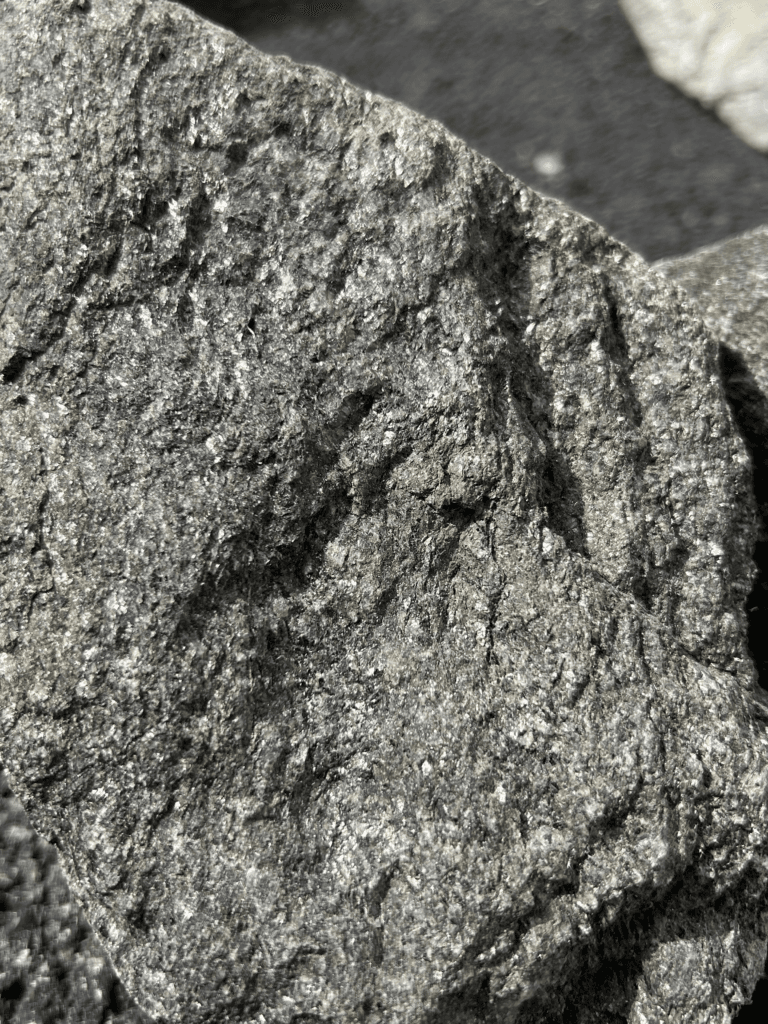
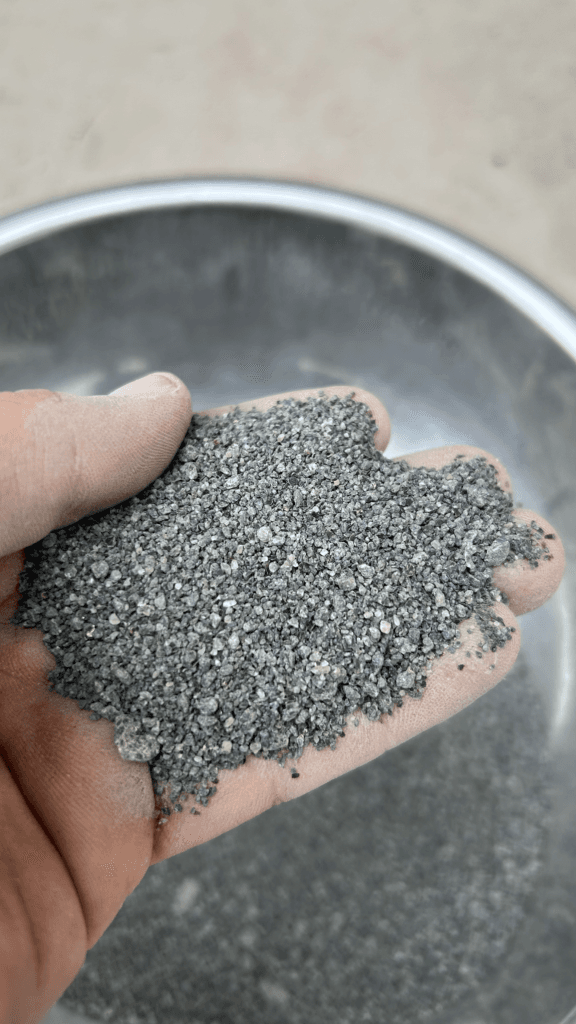
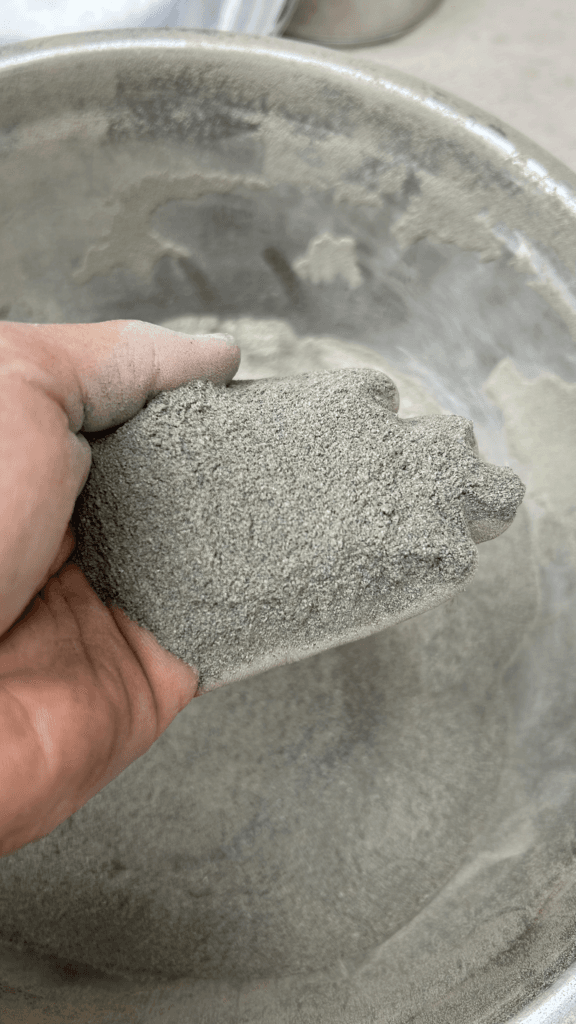
I found this specimen on the side of the road during on my walk in the summer of 2023. Once broken down, it revealed a glimmering, stratified surface. If you’re interested about some of the tools that I have used in this project to process the rocks, I wrote a short blog on the subject : Tools for processing rocks into fine powder for ceramic glazes : an introduction.



Mineral Composition and Considerations for Glaze Development
Note : Unfortunately, I was unable to conduct any XRF analysis for this project, both because of the cost involved (given the large number of specimens) and the limited access to suitable laboratories in the surrounding region. As a result, I relied on a relatively quick and rudimentary identification process based on visual observation, comparison with similar rock types, and hardness scale testing. This work was carried out specimen by specimen with the help of a friend, to whom I am deeply grateful; without this information, it would not have been possible to construct such a rich narrative around the making of these rock-based glazes.
The minerals in this rock are :
- Biotite (Iron & Potassium)
- Muscovite (Potassium)
- Quartz (Silica)
Based on the identified mineral assemblage, this biotite schist is largely composed of flux-bearing minerals commonly encountered in ceramic contexts. The dominance of biotite indicates a high potassium and iron content, while the presence of muscovite further reinforces the contribution of potassium as a major flux. Quartz provides a limited source of silica, but its proportion appears relatively low in comparison to the mica content. As a result, while the mineral composition suggested a strong potential for melting and the development of iron-rich glazes with brown to black tonalities, it remained uncertain whether the available silica would be sufficient to support a stable melt without additional silica input.
Firing Temperature and its Effects
Melt tests were conducted prior to combining the rock with other materials in glaze formulations. This preliminary step served two purposes: first, to gain a general understanding of the rock’s behaviour at cone 6, including its melting characteristics and overall colour potential; and second, to ensure that it could be safely fired in the kiln (for example, by identifying risks such as splattering or excessive melting). This is a step I would strongly recommend, as it provides essential information before moving into full glaze tests. When conducting such tests, I would also advise using small bowls or contained vessels with walls rather than flat tiles, as they offer better protection for kiln shelves in the event of unexpected overmelting.
Finally, I also added pieces of the rock inside one of my clay bodies to see what it would do. I added 5% of the weight of the clay in crushed rock.
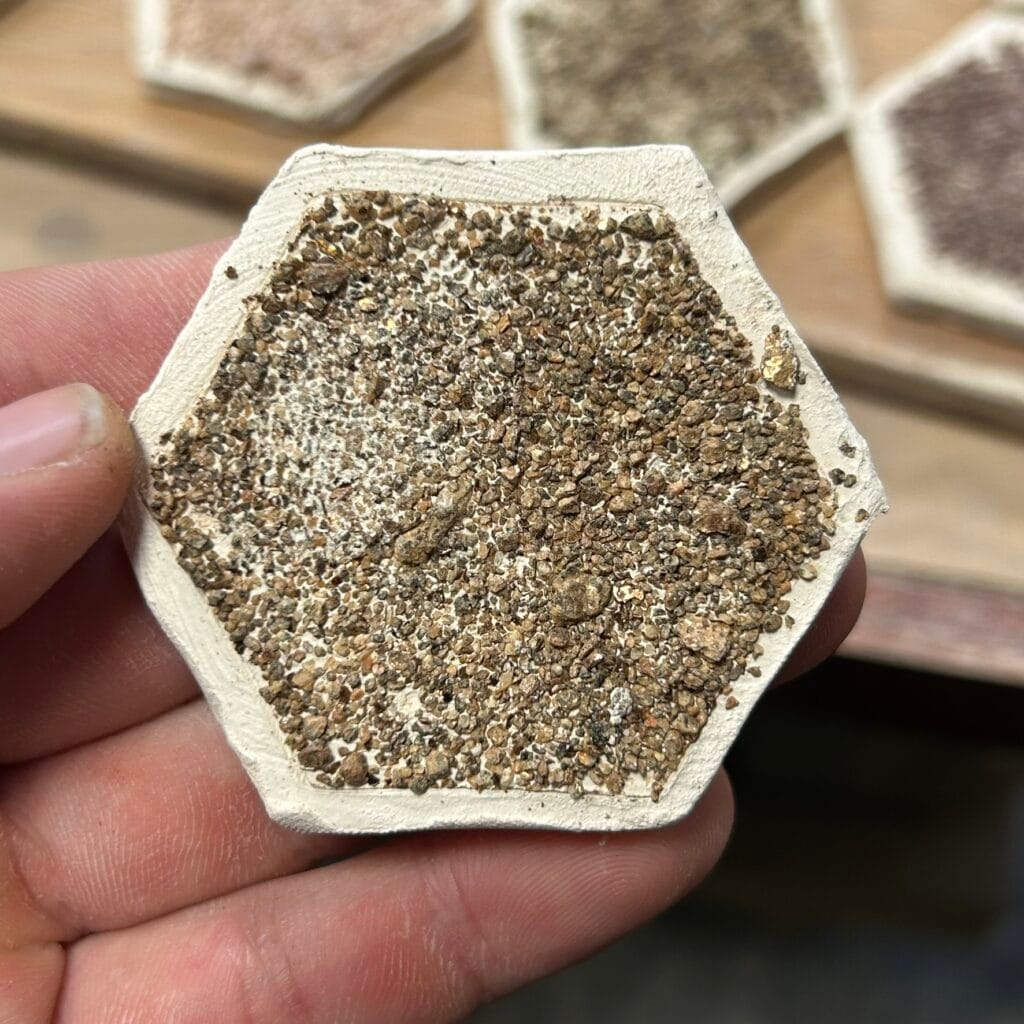
The first set of pictures presented bellow were done using the grog form of the rock (i.e., relatively large pieces). The order is from raw, to bisque firing (cone 04), to glaze firing (cone 6). The sample using grog is barely melting.
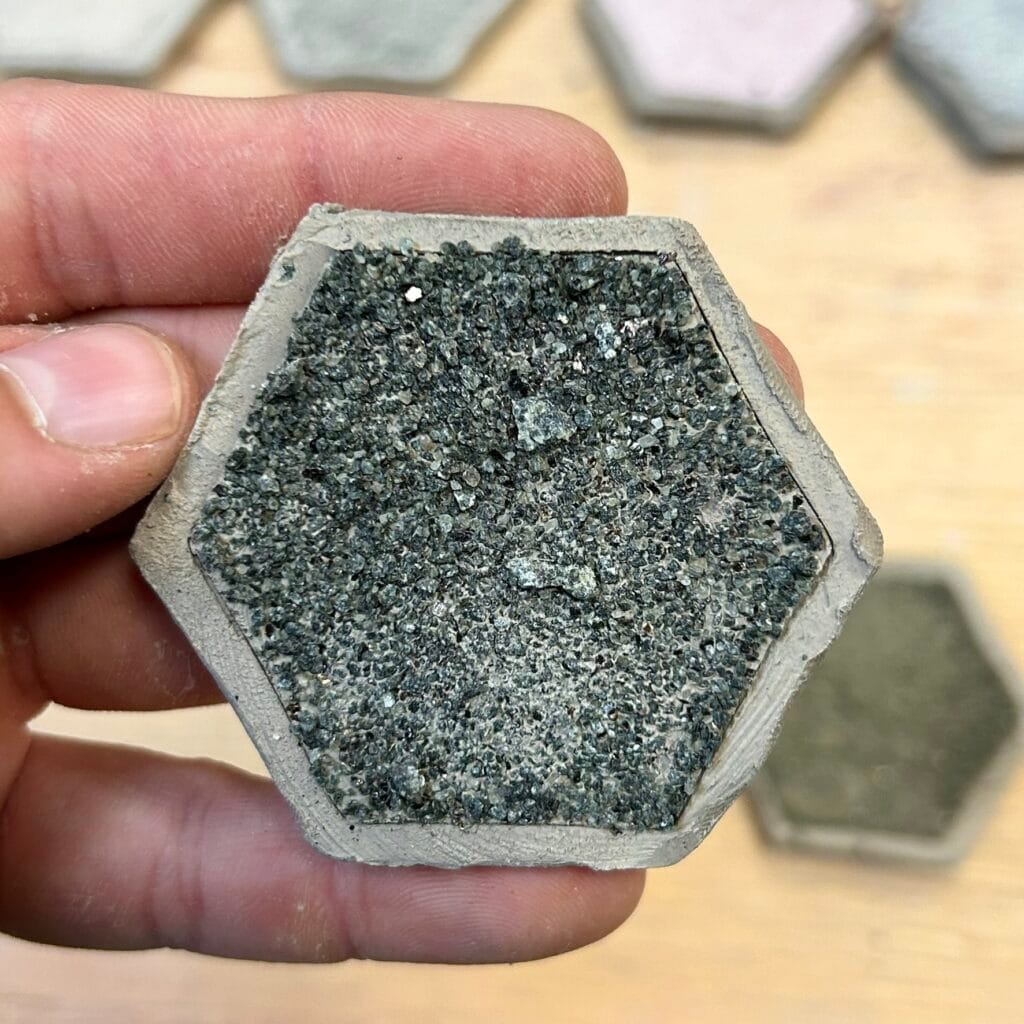

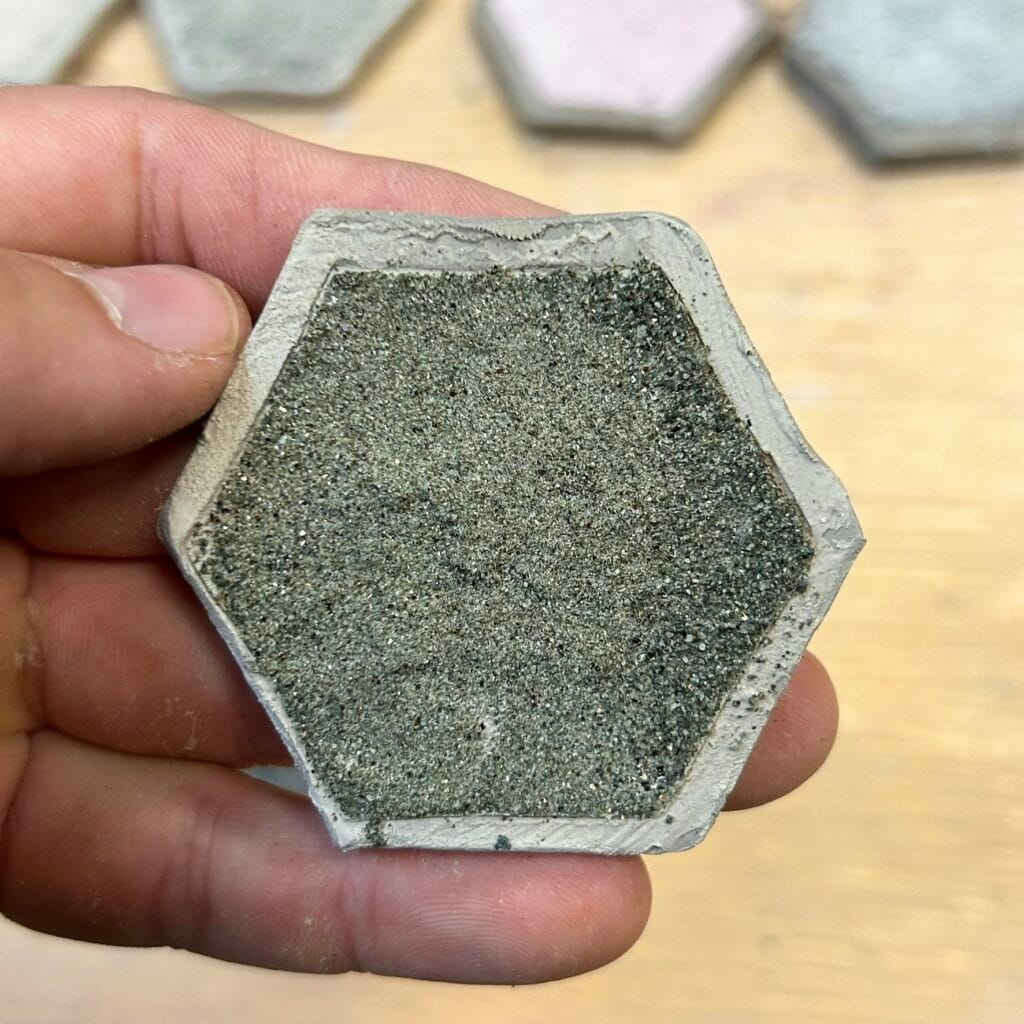
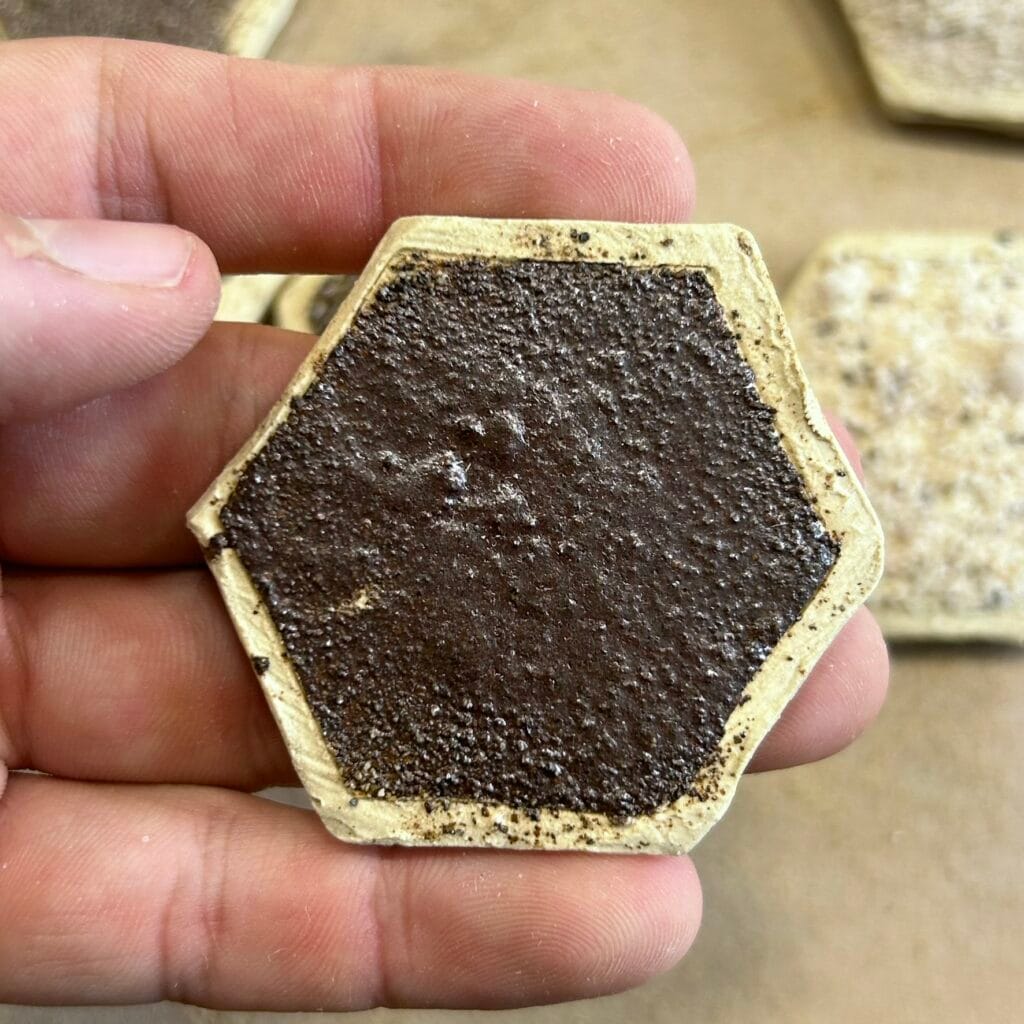
The second set of photographs were done using the powdered form of the rock (40 mesh and finer). It follows the same order : from raw, to bisque firing (cone 04), to glaze firing (cone 6). What I found surprising, but confirms what we know, is that the finer the material, the better the condition for a full melt. That is why, paying attention to mesh size is important when you are processing your own material. In this case, compared to the melt test using grog, this one is almost fully melted.

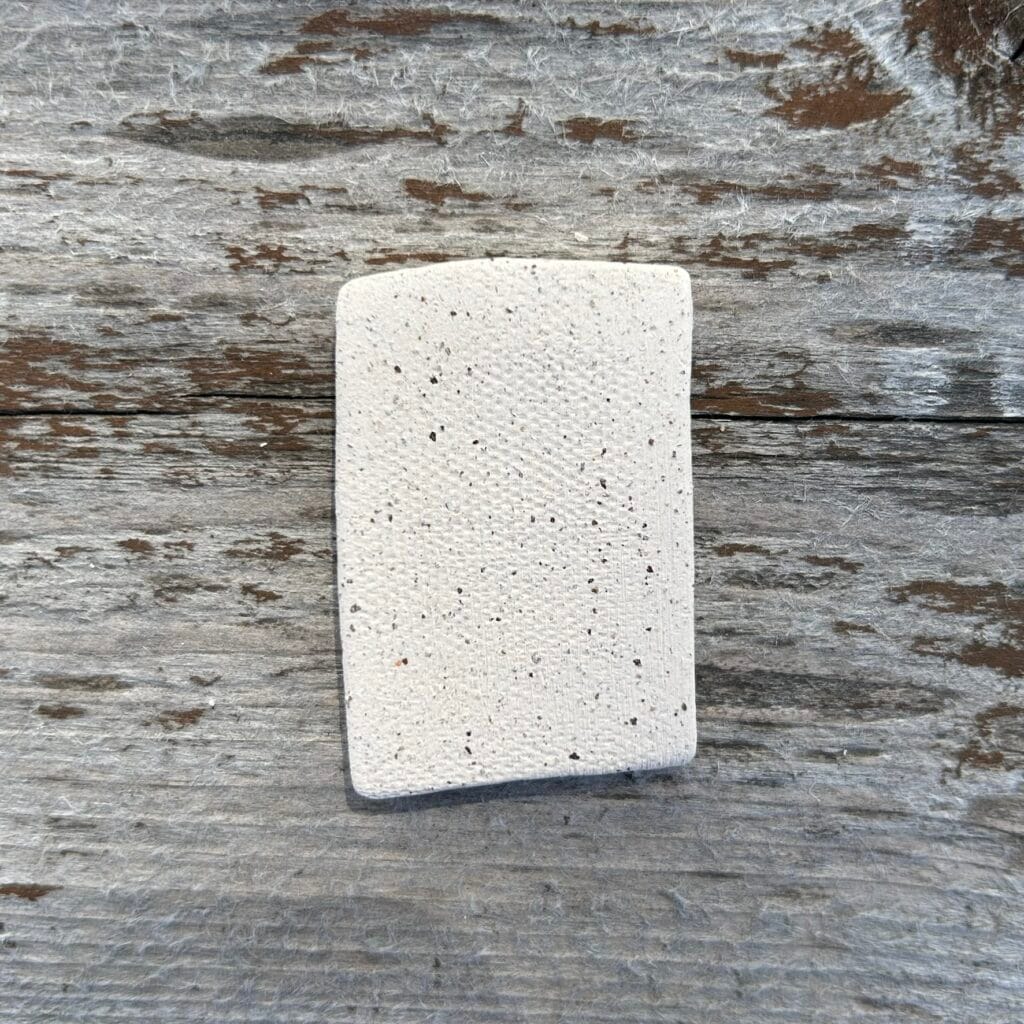
At last, as mentioned earlier, I also added the crushed rock into one of my clay bodies. The images bellow follows the same firing order from those above. The grog, barely visible at first, quite literally “come through” after the glaze firing.


Glaze Recipes
Given the large number of rock samples involved, I chose not to employ conventional line-blending or triaxial blending methods. Instead, I adopted a single base recipe (defined by a fixed ratio of ingredients) for all glaze tests: 85% crushed rock, 10% flux, and 5% clay. For the clay component, I worked with both EP Kaolin (EPK) and Redart (R). In terms of fluxes, I tested Gerstley Borate (GB), Dolomite (D), Whiting or calcium carbonate (W), Zinc Oxide (Z), Nepheline Syenite (NS), and Soda Ash (SA). While varying these proportions might have produced a broader range of glaze outcomes, maintaining a consistent recipe allowed me to more clearly isolate, expand upon, and better understand the specific roles and effects of different fluxes and clay types within the glaze system.
Finally, all of the glazes have been tested of different clay bodies (PSH 519, Tucker’s Mid Cal 5, PSH 540i). In the following section, I have decided to include a few selected test tiles instead of all of them.
Biotite Schist Glazes : An Overview
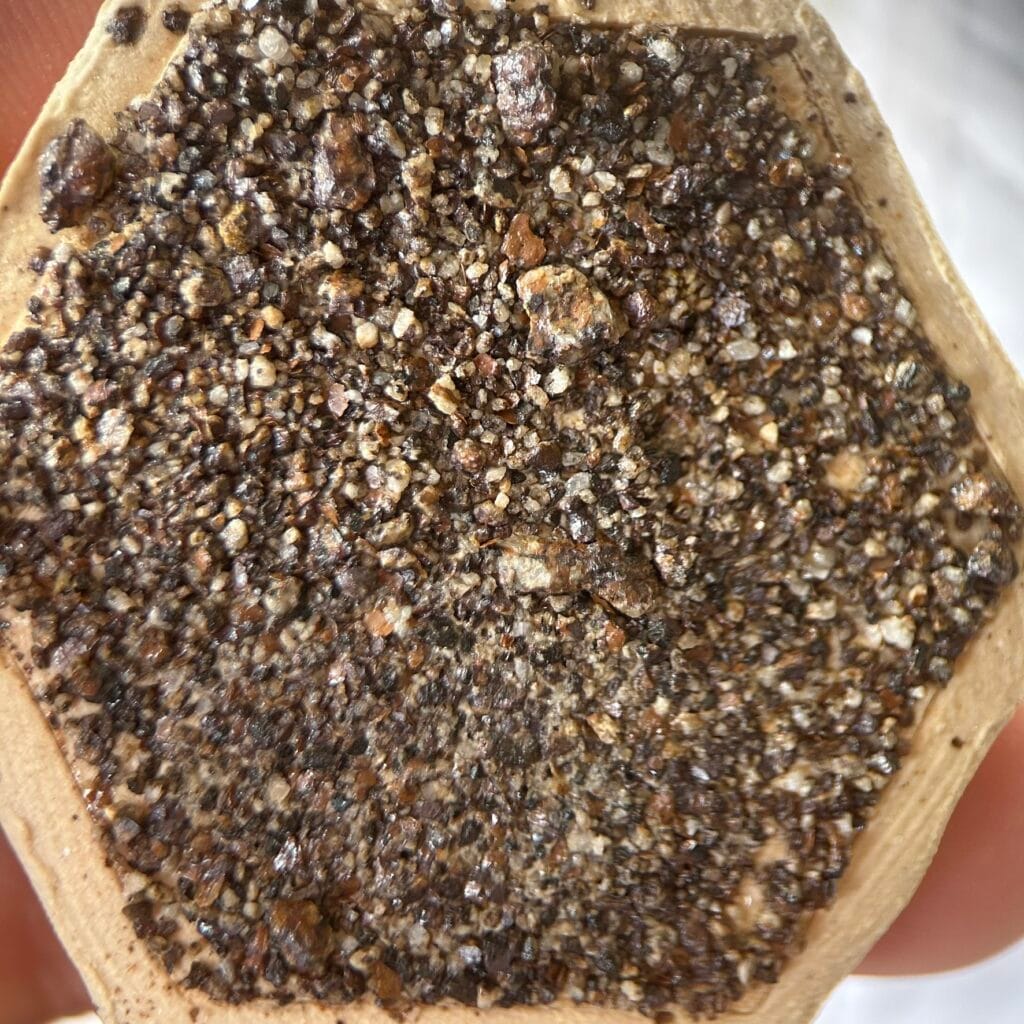
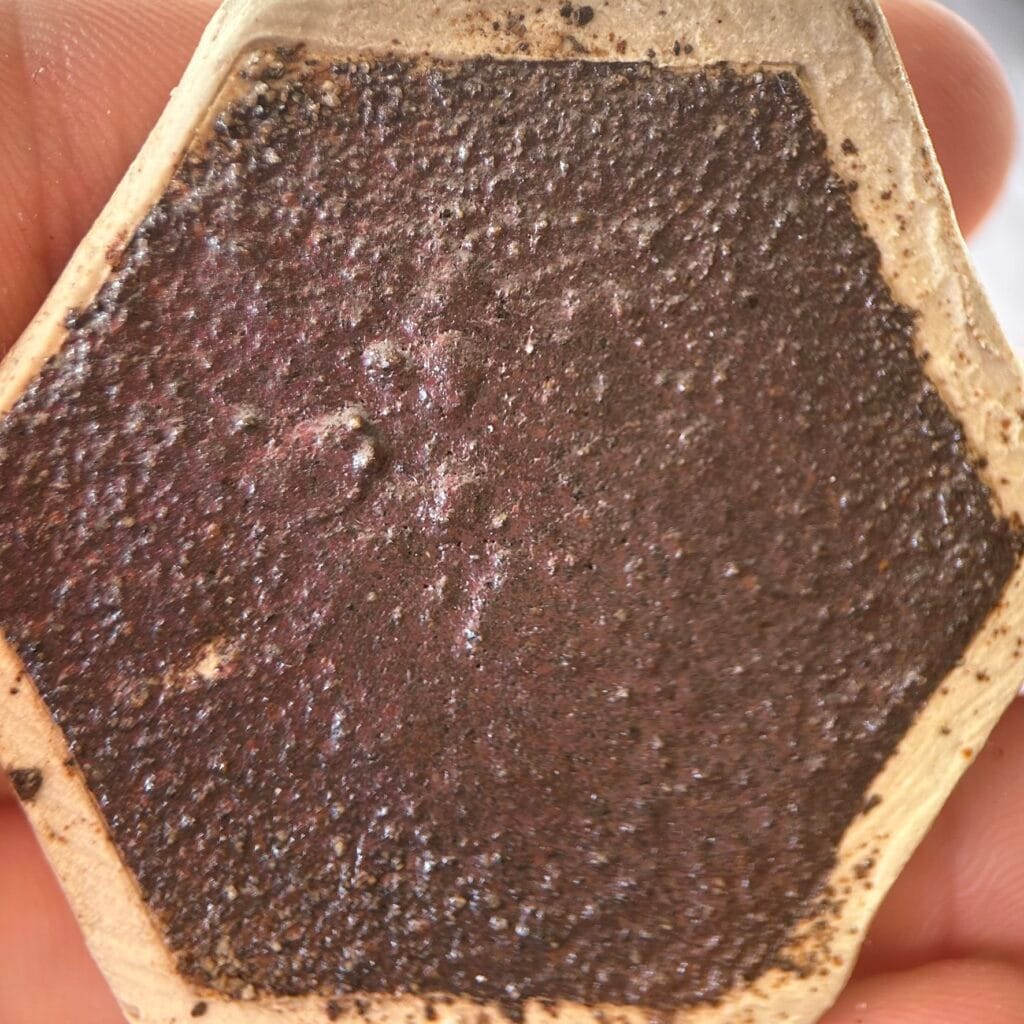
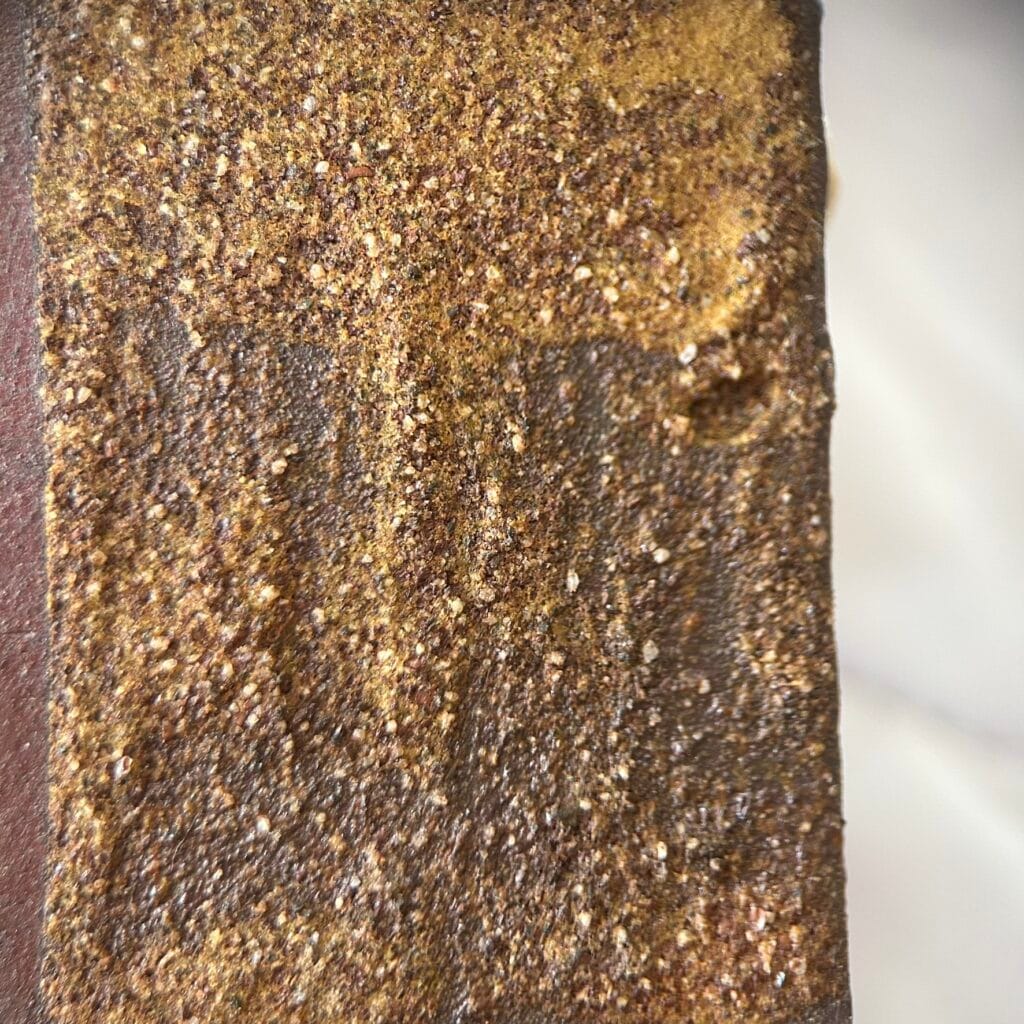
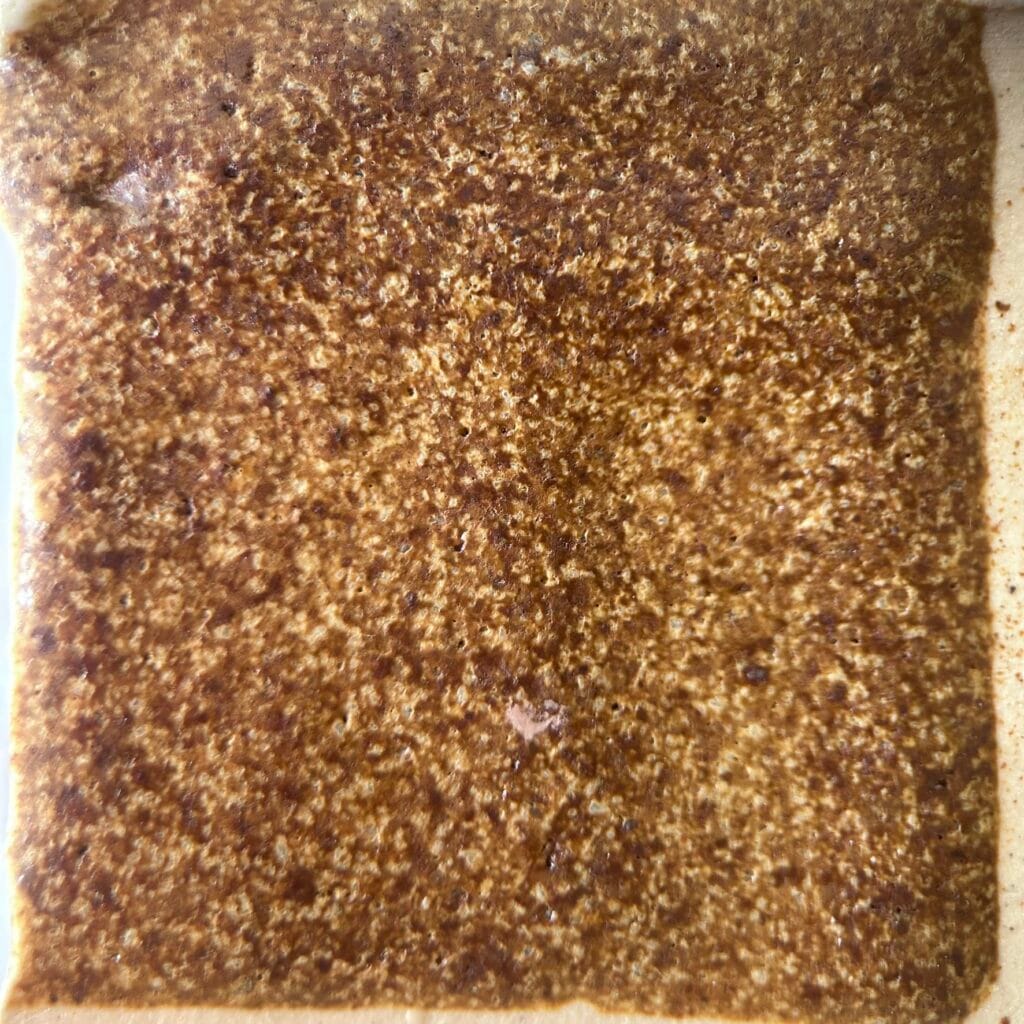
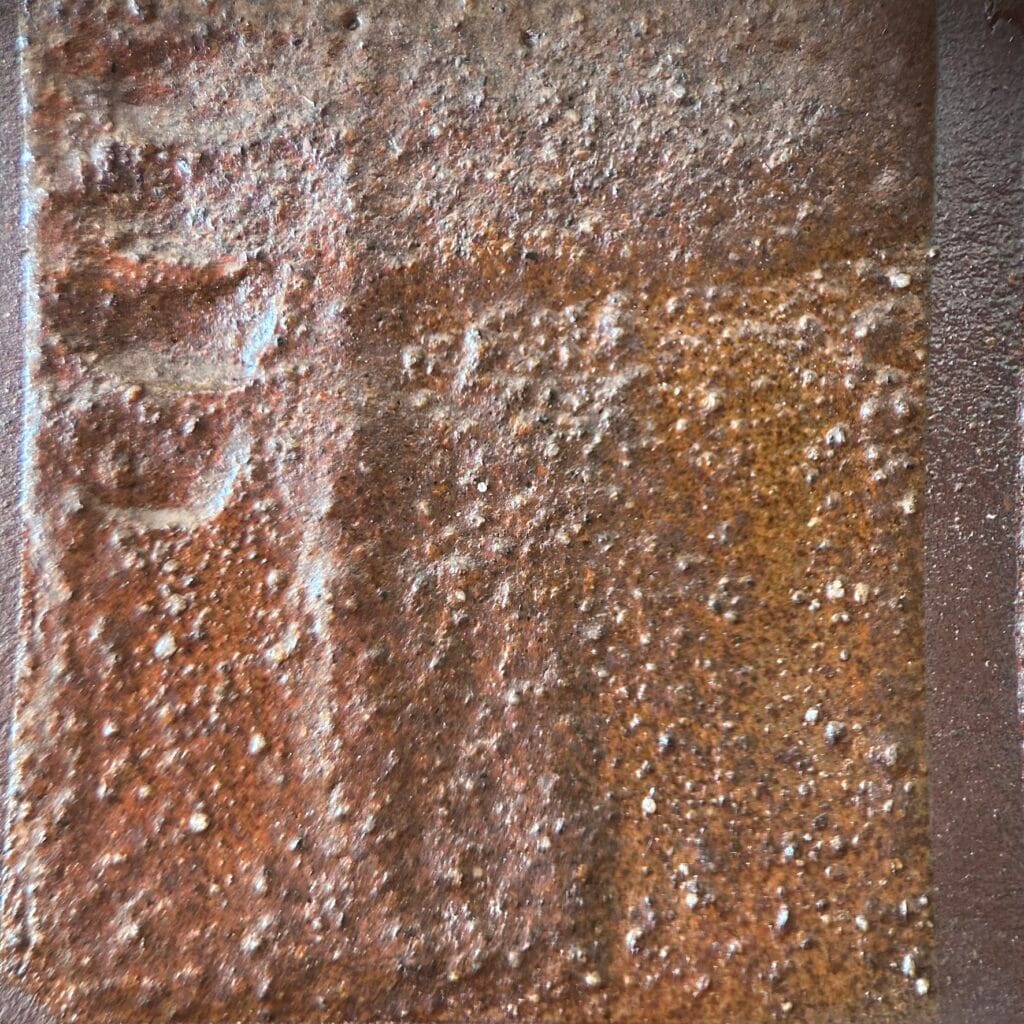
The glazes produced using this biotite schist rock as the primary ingredient offered a rich landscape of colours and textures, which is quite similar to an amphibolite rock I tested before. Although many of the glazes can be situated within the broader family of iron-brown colours, each displayed distinct particularities, including purple spotting and orange-red veining. Among them, the most striking result was the glaze formulated with zinc, which produced an almost old-fashioned mustard hue and surface quality.
Glazes using EPK on PSH 519


Glazes using Redart on PSH 540i


You will find below a short series of videos (recorded in early 2024 and about one minute each) sharing my on-the-spot thoughts about all of them, including the raw melt test.
Biotite Schist Glazes : A Closer Look
The idea of macro photographies came after observing the glazes using a magnifying lense. I though it was really interesting the way the close-up shots allowed us to view details that would go missing to the naked eye.



Going Beyond Testing
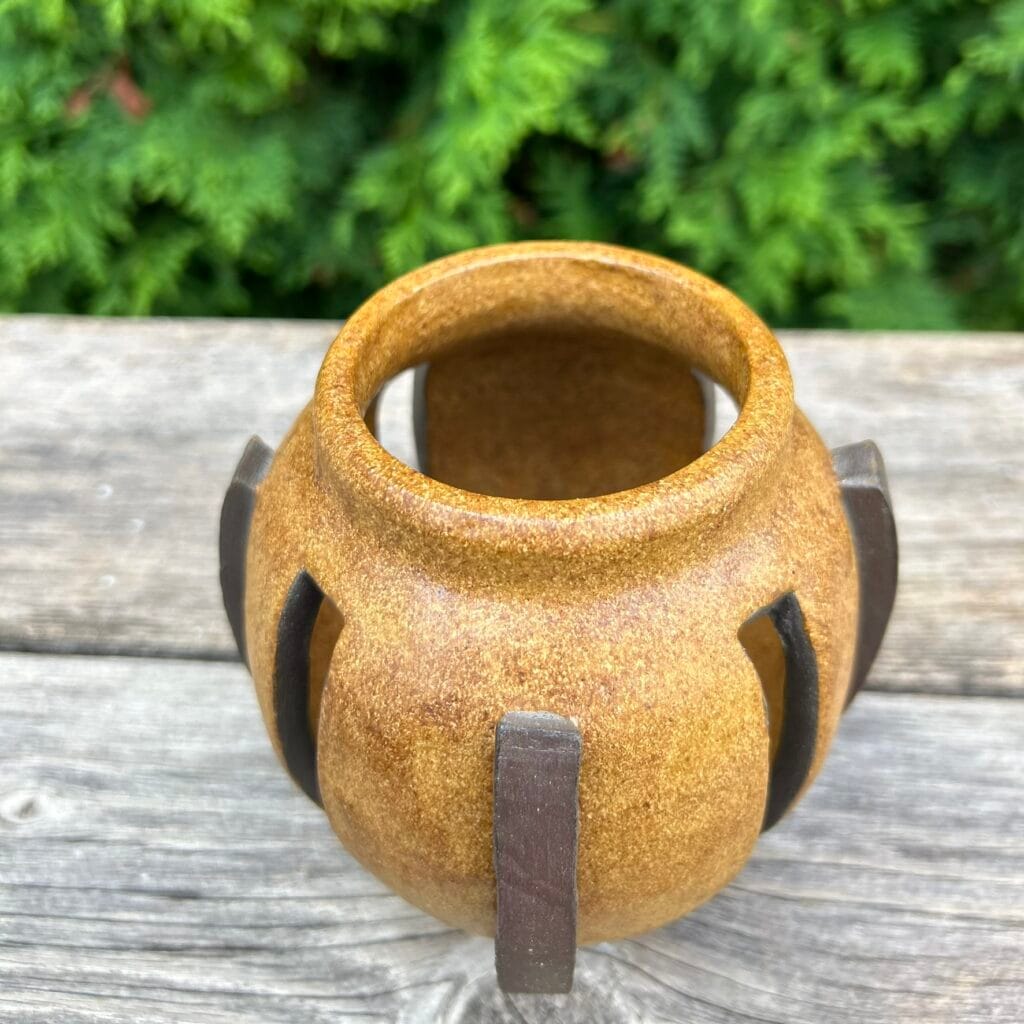
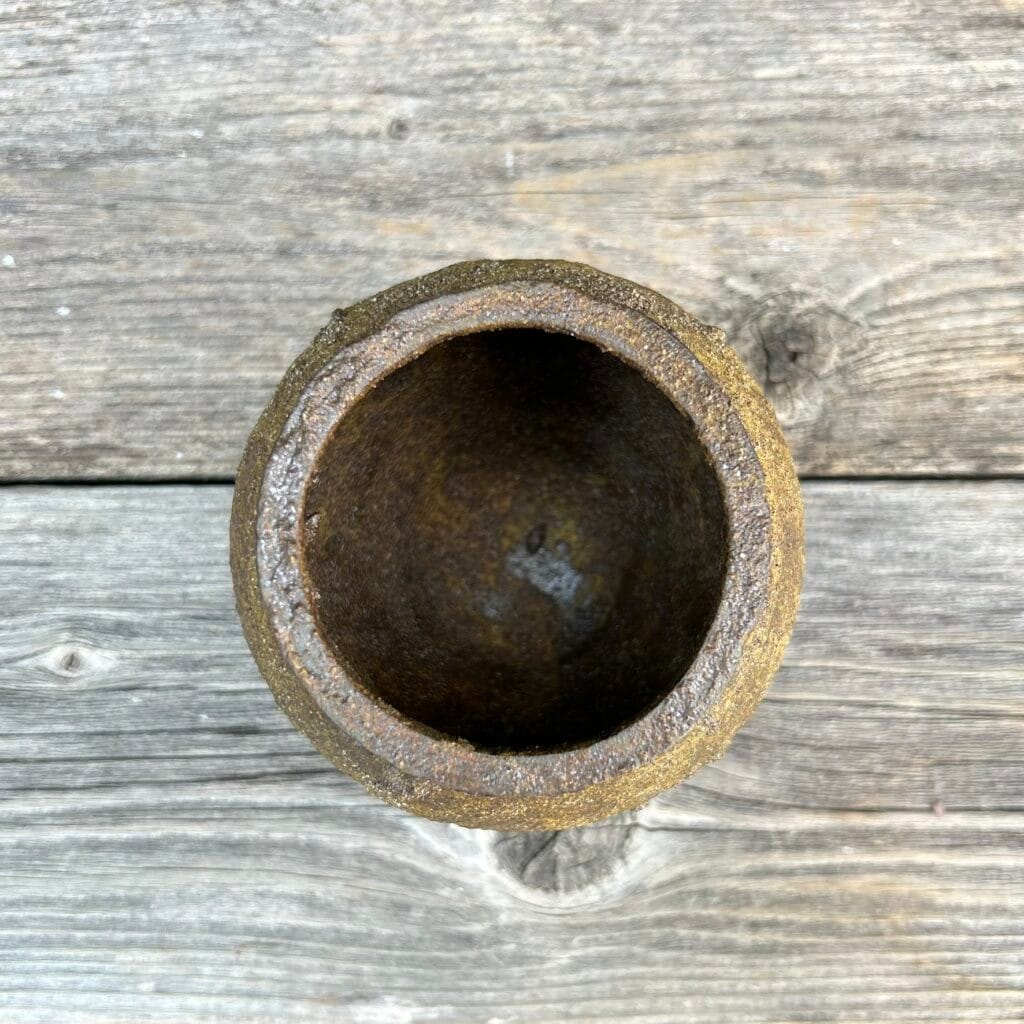
The final step in glaze testing lies in the application of the glazes on finished pieces. For each rock in this project, I selected two of my preferred glaze outcomes and applied them to moon jars in order to assess their behaviour in a functional and aesthetic context. Presented below are the two moon jars produced using glazes derived from this biotite schist.
Moon Jar [É23I – 1]




Moon Jar [É23I – 2]


As always, thank you for taking an interest in my work. I hope this publication can serve as both a useful resource and a source of inspiration.
Leave a Reply