
Note : This publication extends my exhibition Ceramic Rock Glazes : Developing a Geological Language of Alternative Ceramic Materials. It brings together all of my previous publications (on Instagram) into a single document in order to improve accessibility while also offering a more detailed and comprehensive exploration of the subject.
Magenta Lepidolite
Each publication in this series follows a consistent structure, beginning with a return to fundamental principles of mineralogy in order to build a more comprehensive understanding of the chemical reactions that occur during firing. The process is documented through a series of images, presenting both the raw materials and selected outcomes from glaze testing. I hope these texts are useful, informative, and perhaps even inspiring for your future projects..
From Rock to Dust
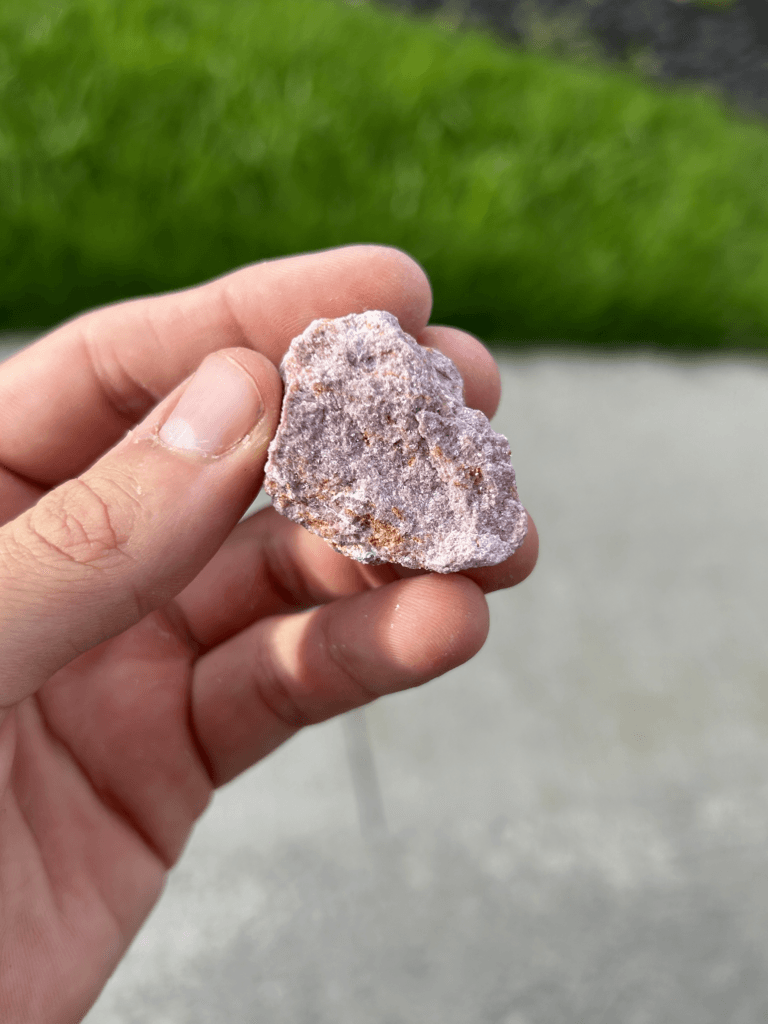
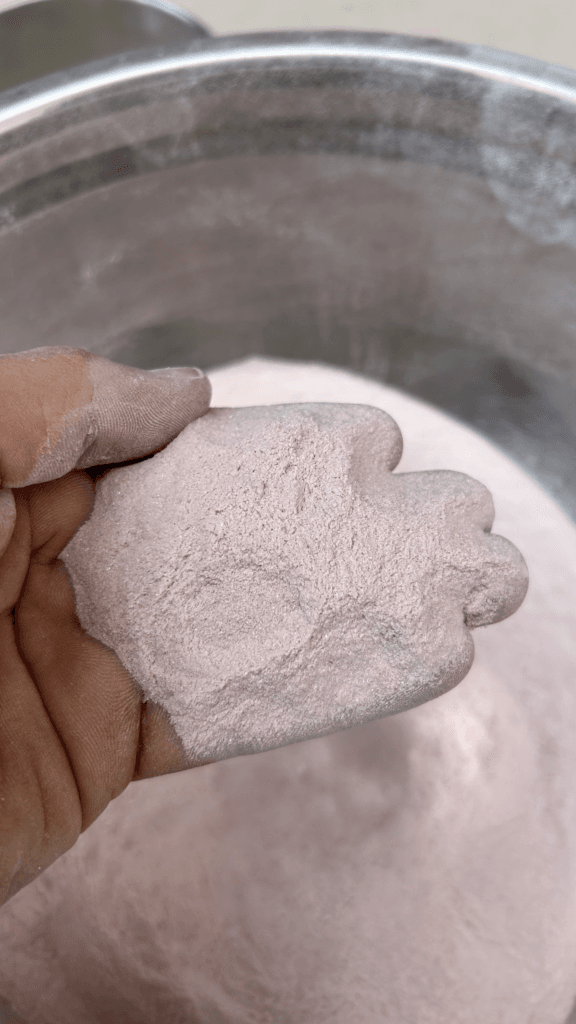
As with the majority of the rocks in this project, I found this one on the side of the road during on my walk in the summer of 2023. Compared to the other lepidolite used in this project, it lacks the huge crystal of quartz and veins going across it. Instead, the rock displays a tight crystalline network. After being crushed, it became this light (almost) pink powder. If you’re interested about some of the tools that I have used in this project to process the rocks, I wrote a short blog on the subject : Tools for processing rocks into fine powder for ceramic glazes : an introduction.



Mineral Composition and Considerations for Glaze Development
Note : XRF analysis could not be conducted for this project due to cost constraints, the large number of samples, and limited access to suitable laboratories. Consequently, identification relied on a rapid visual observation, comparison with similar rock types, hardness testing, and melt tests. This work was carried out with the invaluable assistance of a friend, to whom I am deeply grateful. In the absence of XRF data, all conclusions regarding mineral composition remain provisional; while not definitive, they provide a solid foundation for understanding the material and guiding further investigation.
The general composition of this rock :
- Lepidolite (Lithium-bearing Mica)
- Quartz (Silica)
- Calcite (Whiting / Calcium Carbonate)
Firing Temperature and its Effects
Before incorporating the rock into glaze formulations, I conducted melt tests at cone 6 to assess its behavior at high temperatures, specifically its melting characteristics, surface response, and potential color development. This step also served to confirm that the rock could be fired safely, without excessive splattering or overmelting. I strongly recommend carrying out similar tests when working with raw or unfamiliar materials. Using small bowls or containers with raised walls, rather than flat tiles, can help protect kiln shelves in case the material becomes unexpectedly fluid.
In addition, I introduced fragments of the rock directly into one of my clay bodies, adding crushed material at 5% of the clay’s total weight, in order to observe its behavior within the clay matrix.
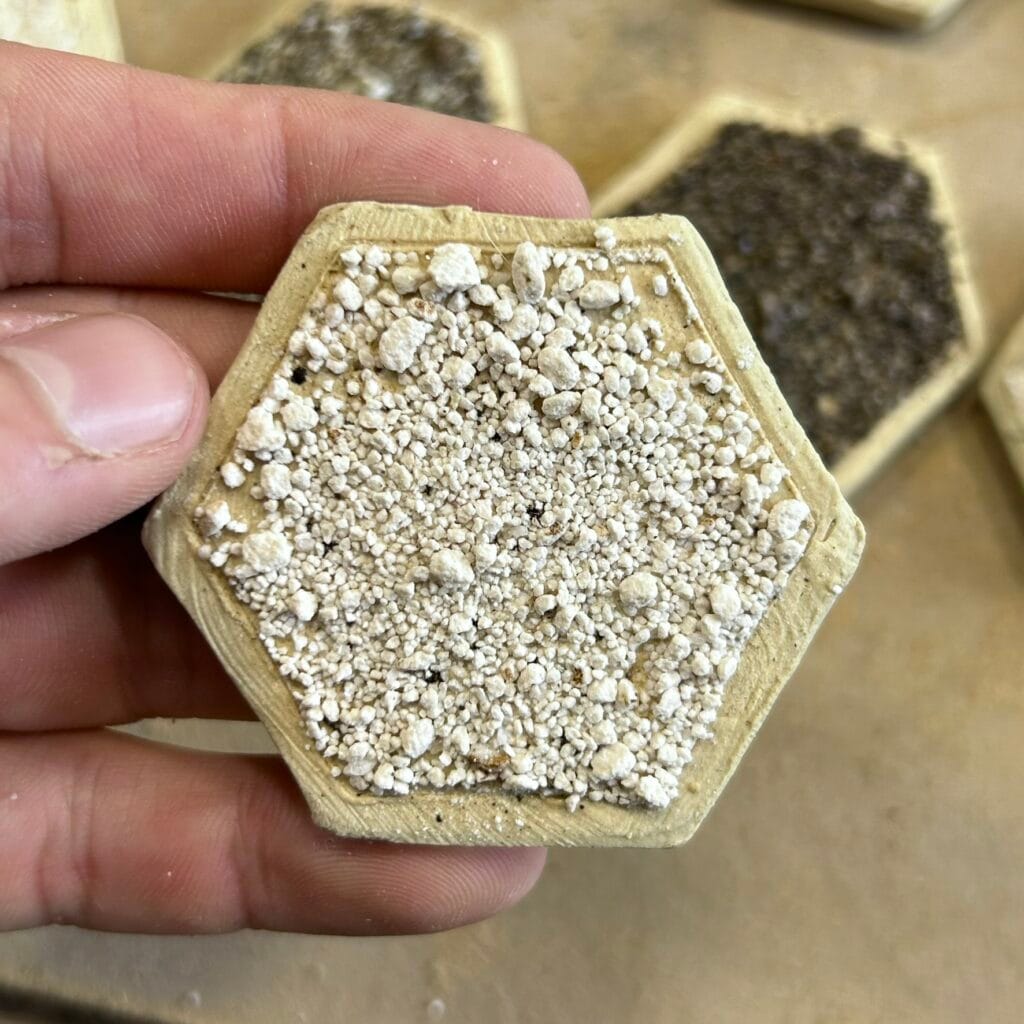
The first set of images presented below features the rock in its grog form (i.e., relatively large particles), progressing from the raw state to bisque firing (cone 04), and finally to glaze firing (cone 6). I was particularly struck by how bright the material appeared after firing, especially after turning grey after the bisque firing.


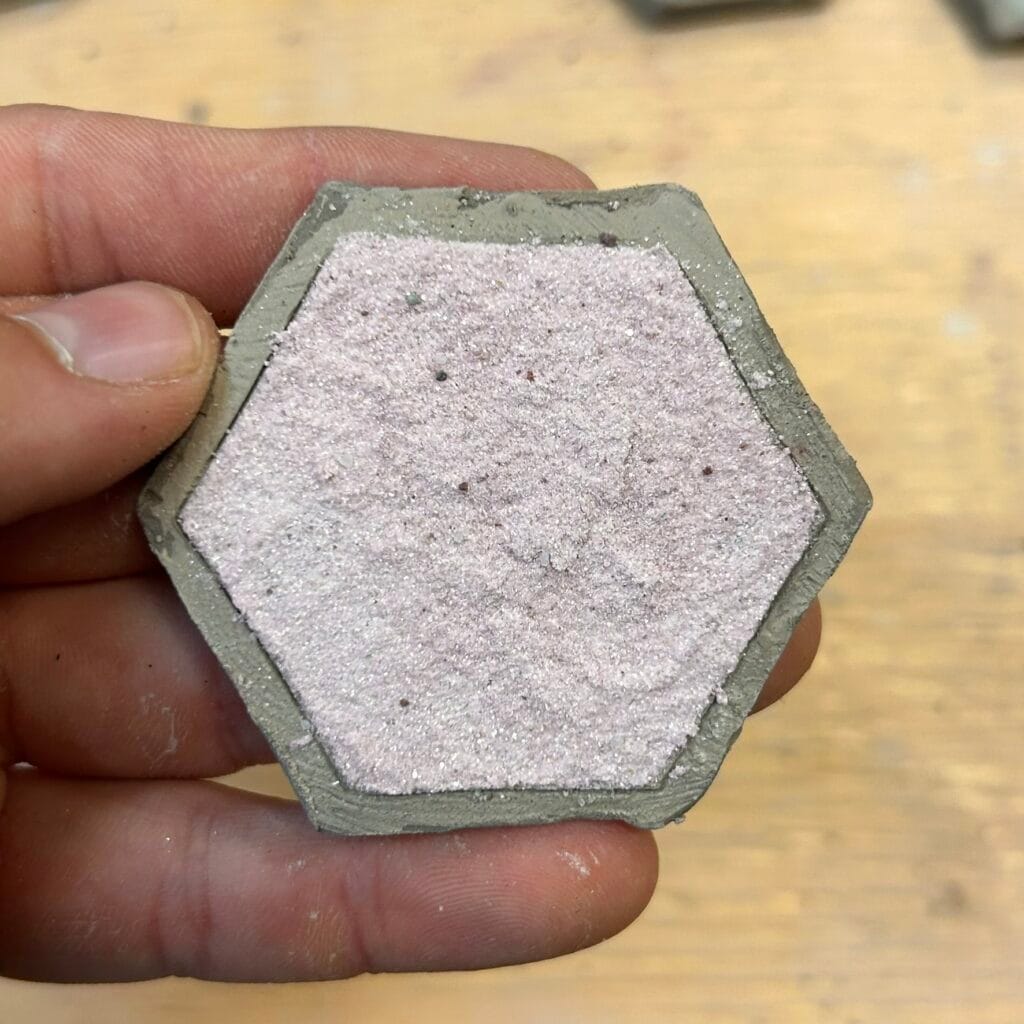
The second set of photographs were done using the powdered form of the rock (40 mesh and finer). It follows the same order : from raw, to bisque firing (cone 04), to glaze firing (cone 6).
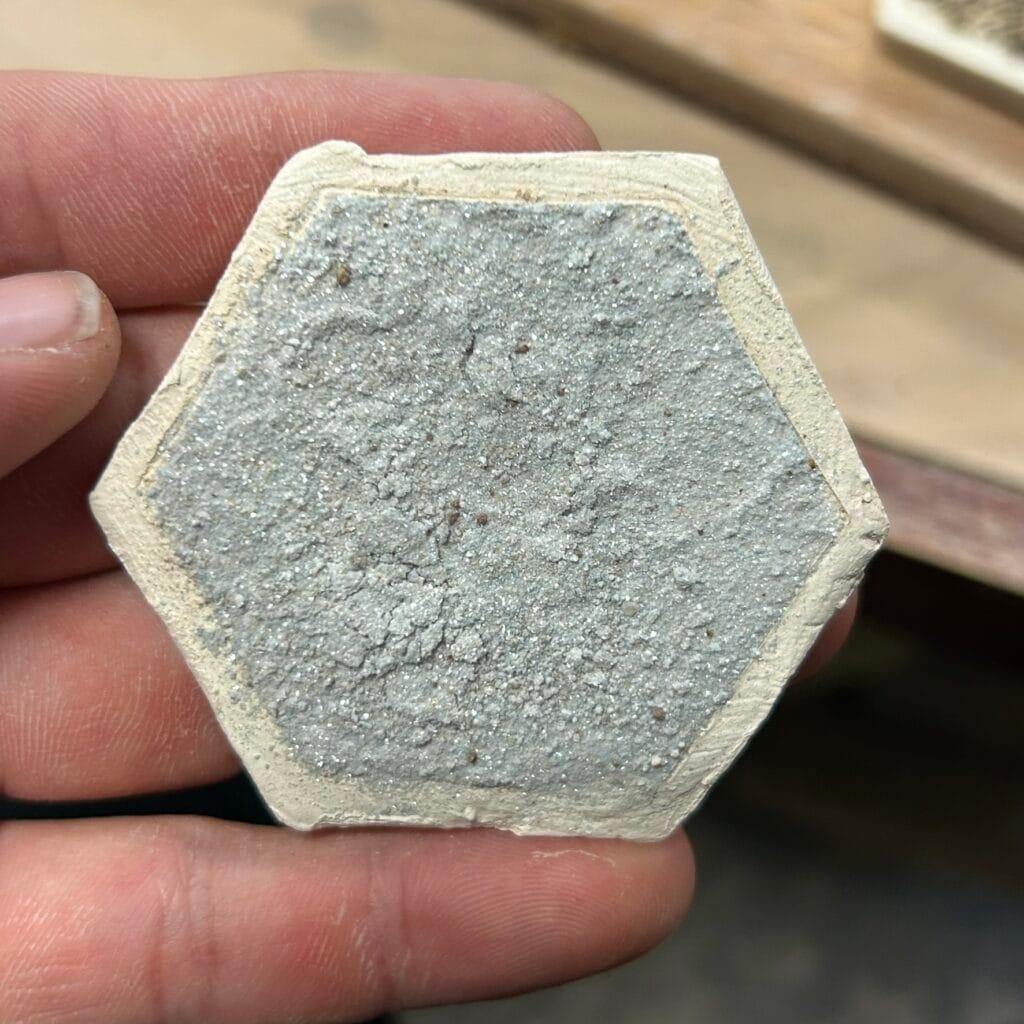
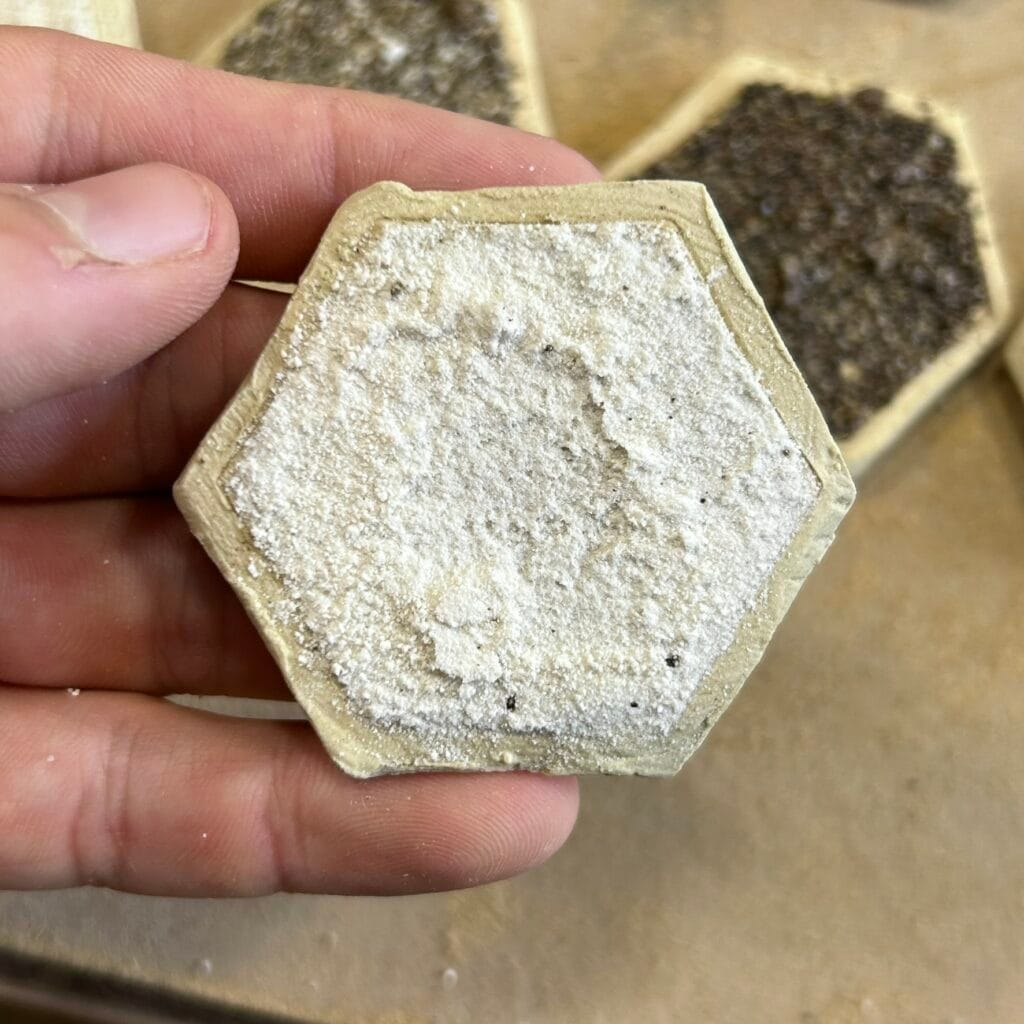
At last, as mentioned earlier, I also added the crushed rock into one of my clay bodies. The images bellow follows the same firing order from those above.
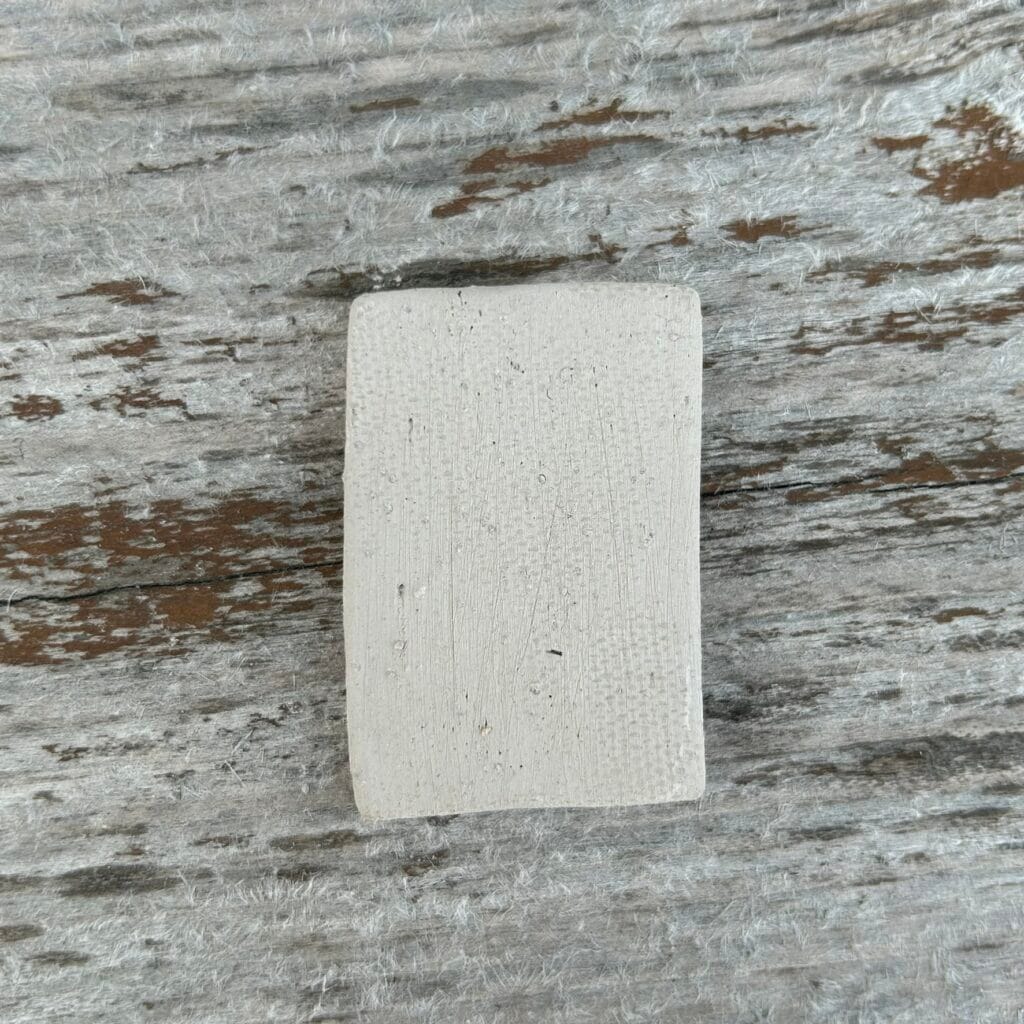
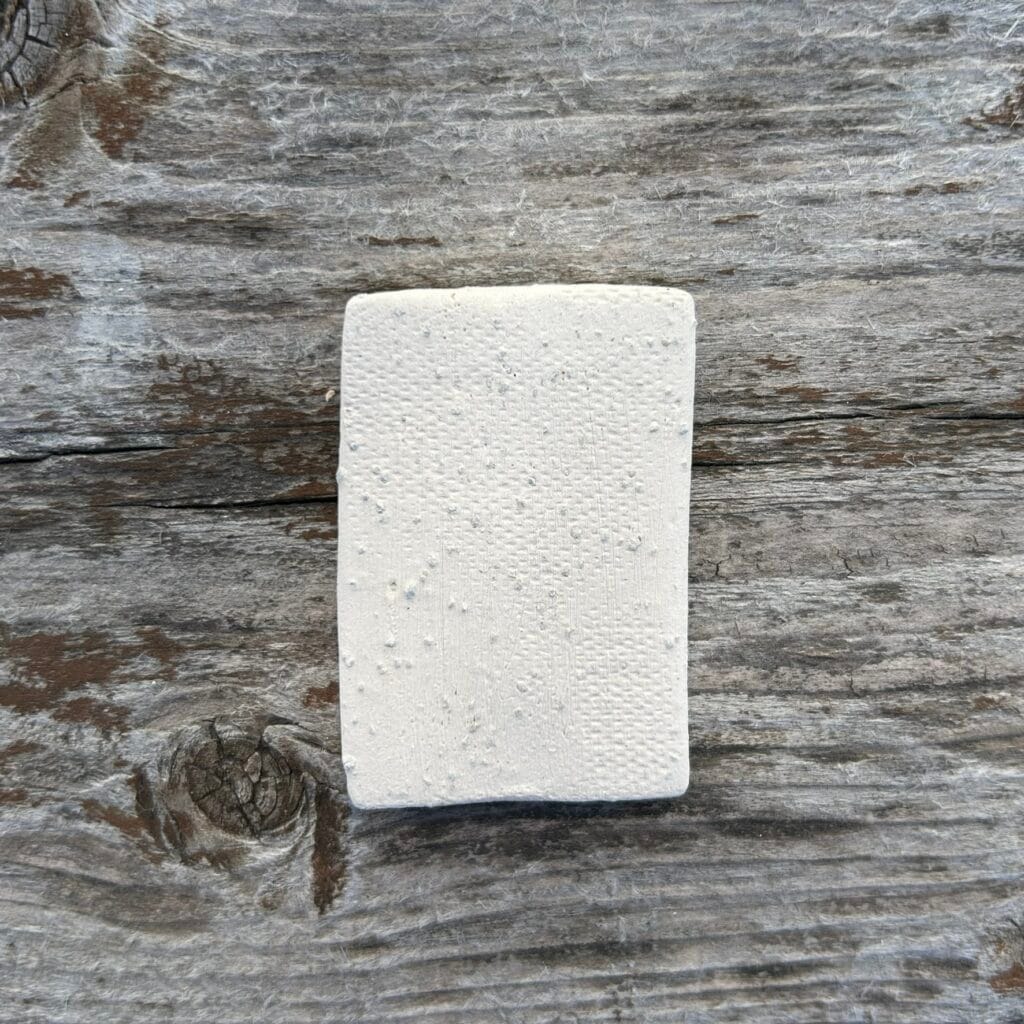

Glaze Recipes
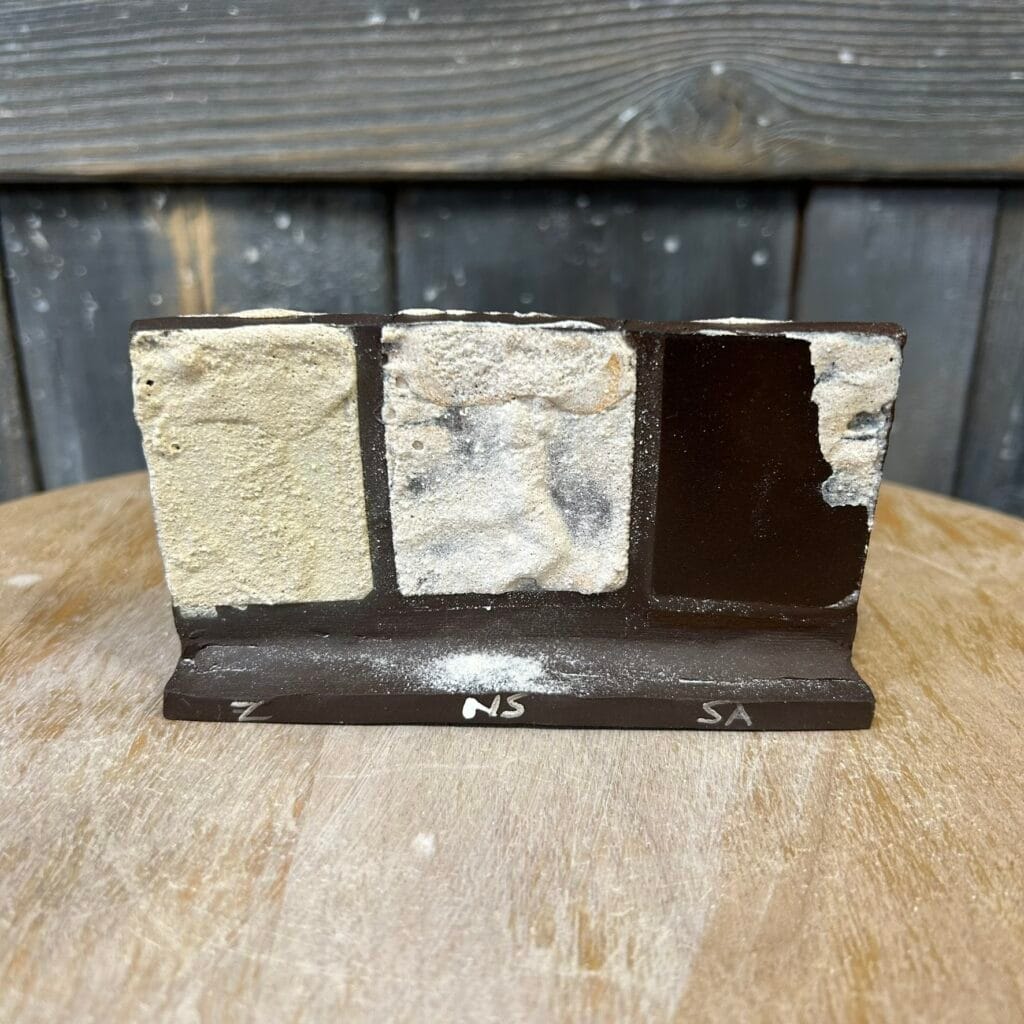
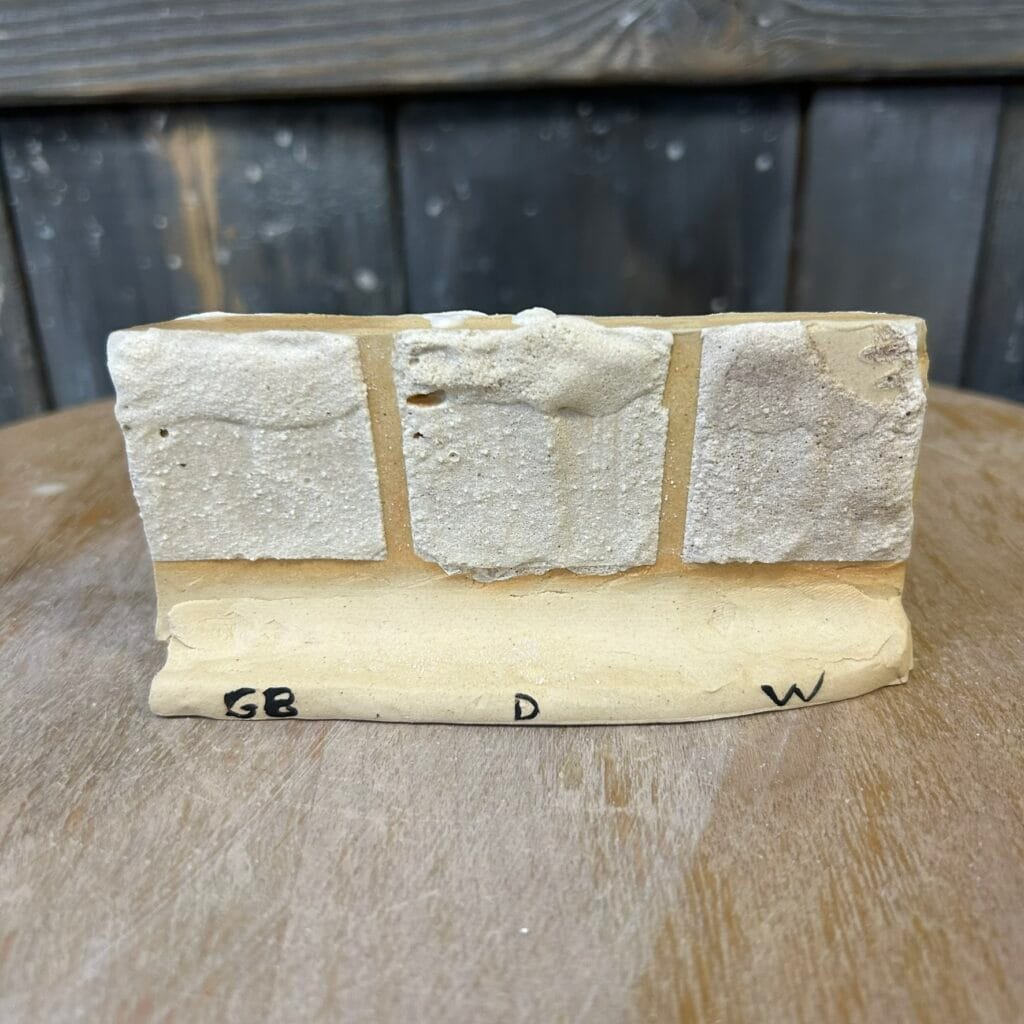
Given the large number of rock samples, I chose to move away from conventional line-blend and triaxial testing methods. Instead, all glaze tests were based on a single, consistent recipe: 85% crushed rock, 10% flux, and 5% clay. The clay component alternated between EP Kaolin (EPK) and Redart (R), while the fluxes tested included Gerstley Borate (GB), Dolomite (D), Whiting (W), Zinc Oxide (Z), Nepheline Syenite (NS), and Soda Ash (SA). Although adjusting these proportions might have generated a broader range of surface effects, maintaining a fixed formula allowed for a more precise analysis of the individual influence of each flux and clay.
All glazes were tested on different clay bodies : PSH 519, Tucker’s Mid Cal 5, and PSH 540i. In the following section, I present a curated selection of test tiles rather than the complete set.
Magenta Lepidolite : An Overview
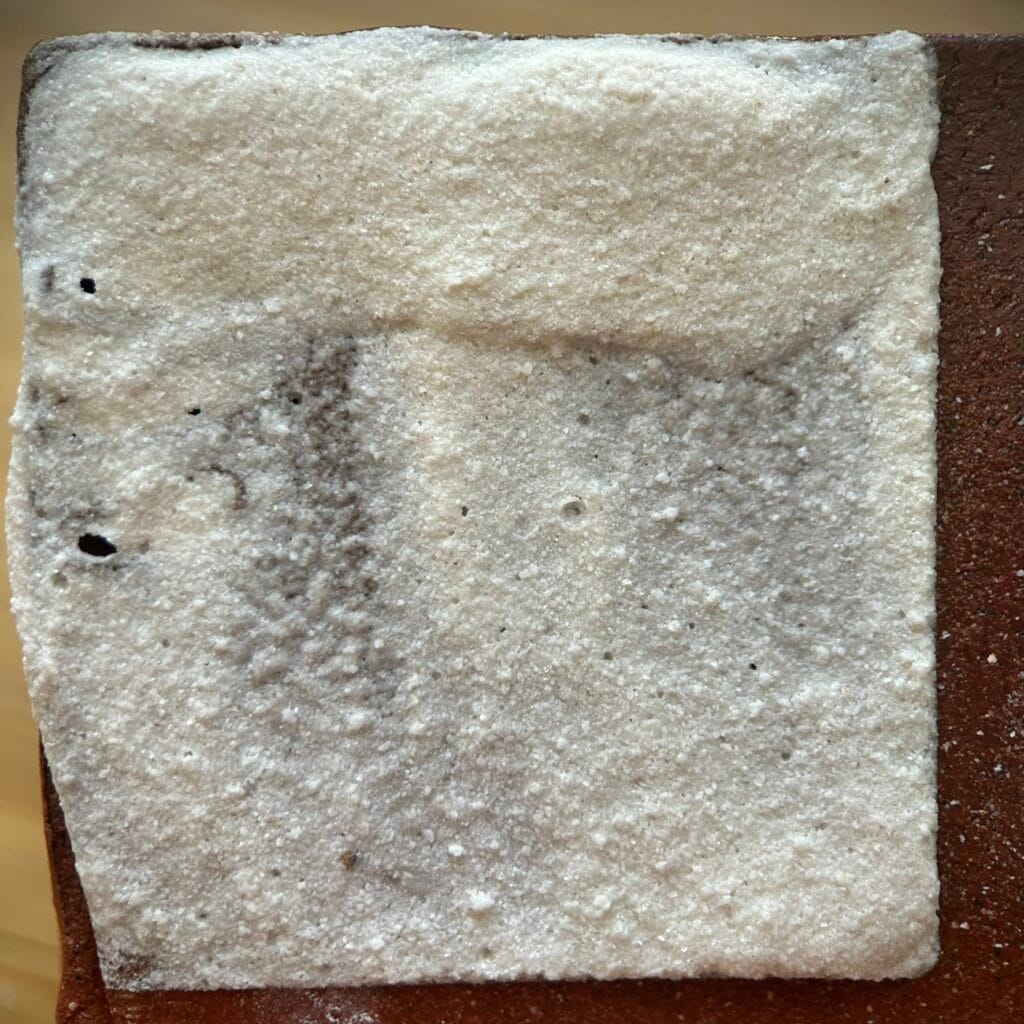
Similar to the other lepidolite in this series, the glazes are mostly within the range of white. That being said, compared to the other, this one barely creates a glass-like surface.
Glazes using Redart on PSH 540i

Glazes using EPK on PSH 519

Below is a short series of videos, recorded in early 2024 (approximately one minute each), in which I share my on-the-spot observations, including reflections on the raw melt test.
Magenta Lepidolite : A Closer Look
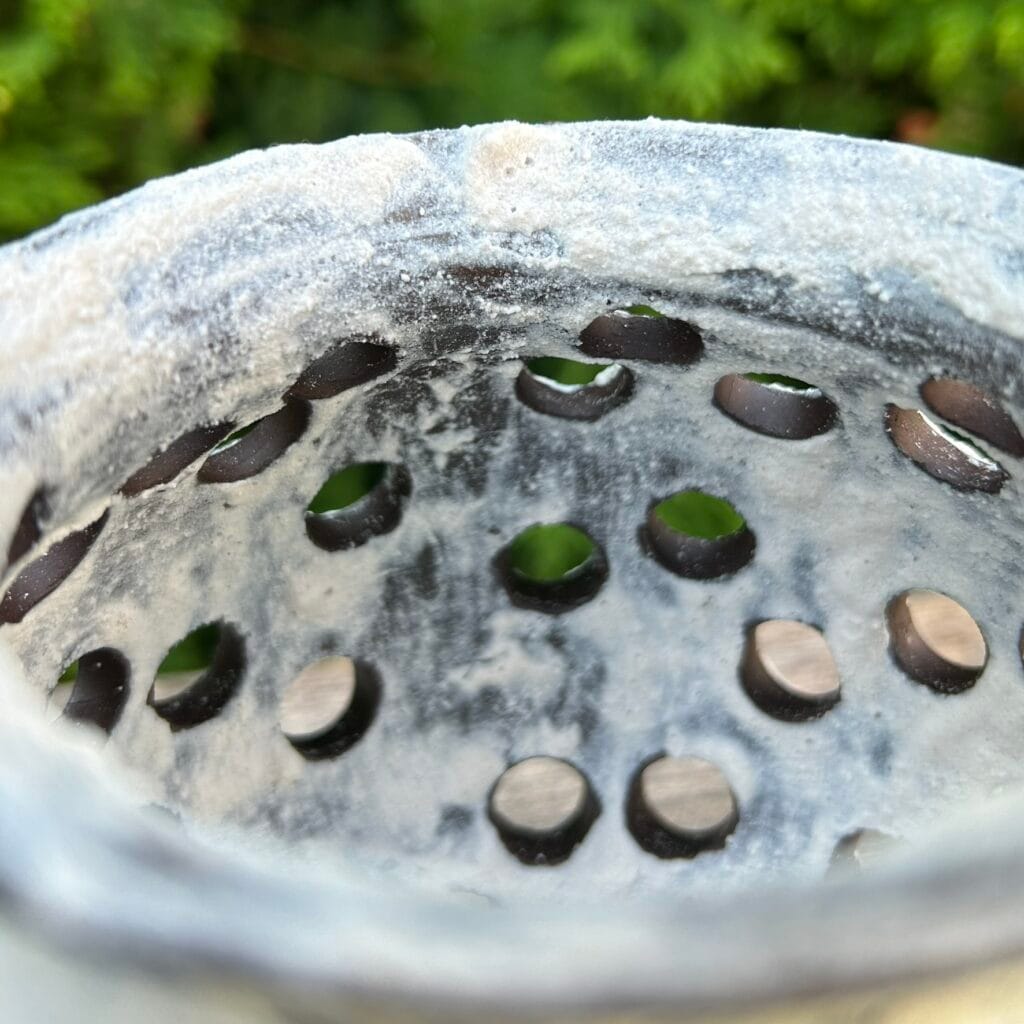
The close-up images below reveals details that would otherwise be difficult to assess to the naked eye, especially the changes in texture.




Going Beyond Testing
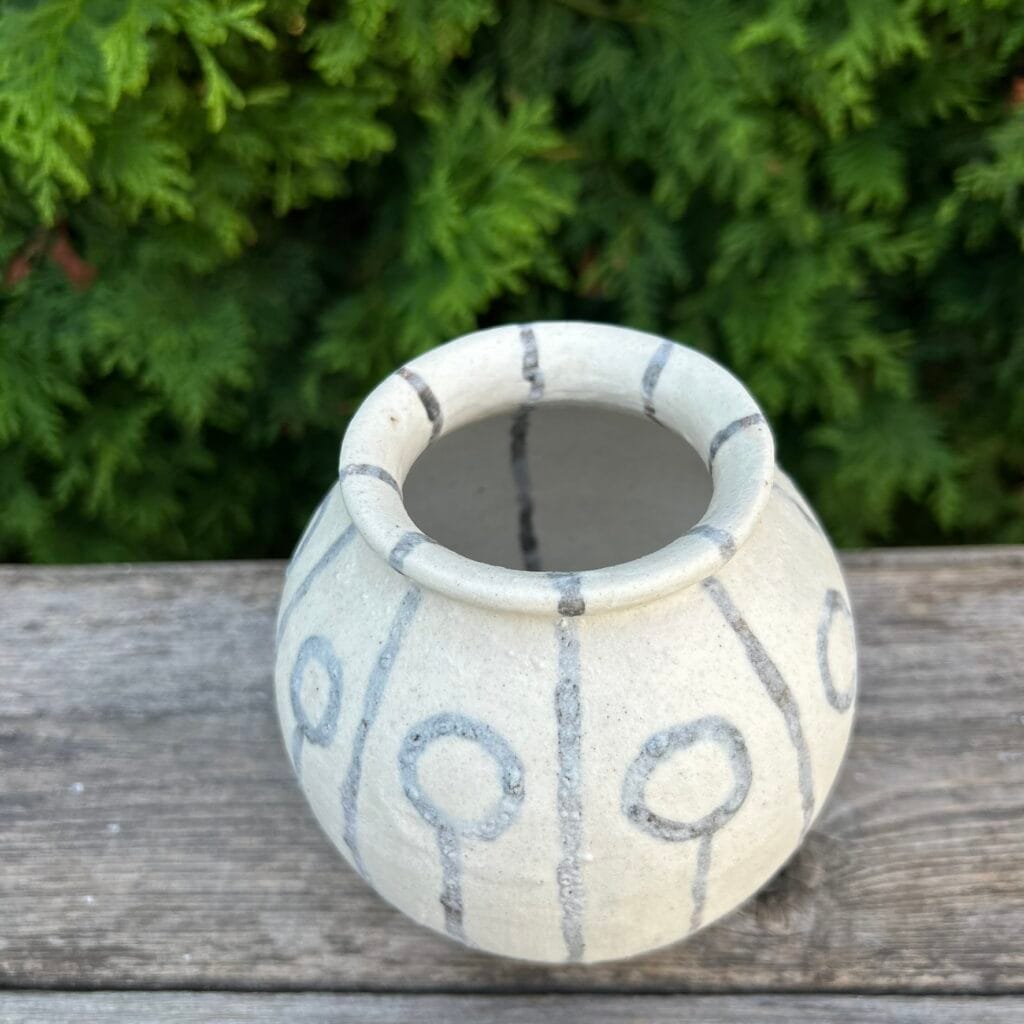
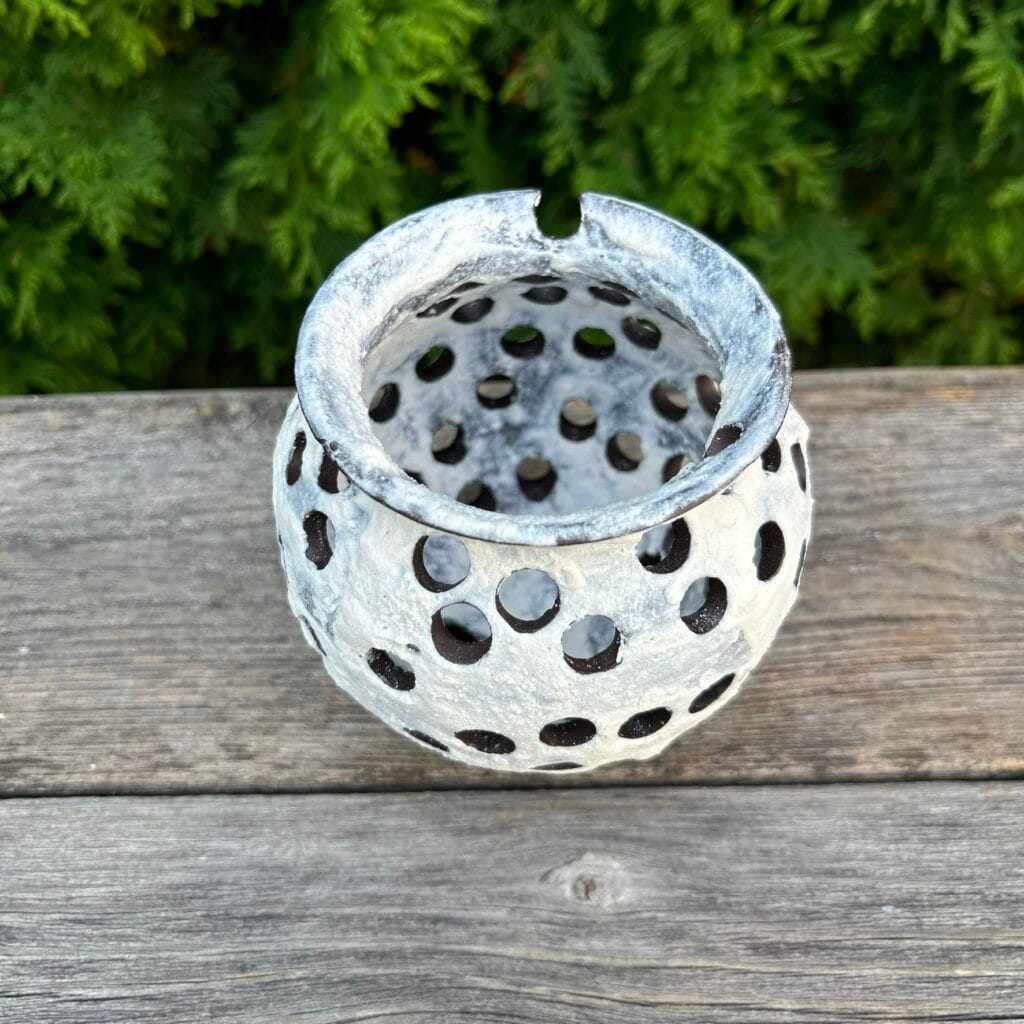
The true test of a glaze emerges in its application on finished pieces. For each rock in this project, I selected two of my preferred glazes and applied them to moon jars, presenting them within both a functional and aesthetic context. Below are the two jars produced using glazes derived from this magenta lepidolite. I’d like to note that the first moon jar has drawings underneath the glaze made with mixture of clay and rust powder.
Moon Jar [É23M – 1]

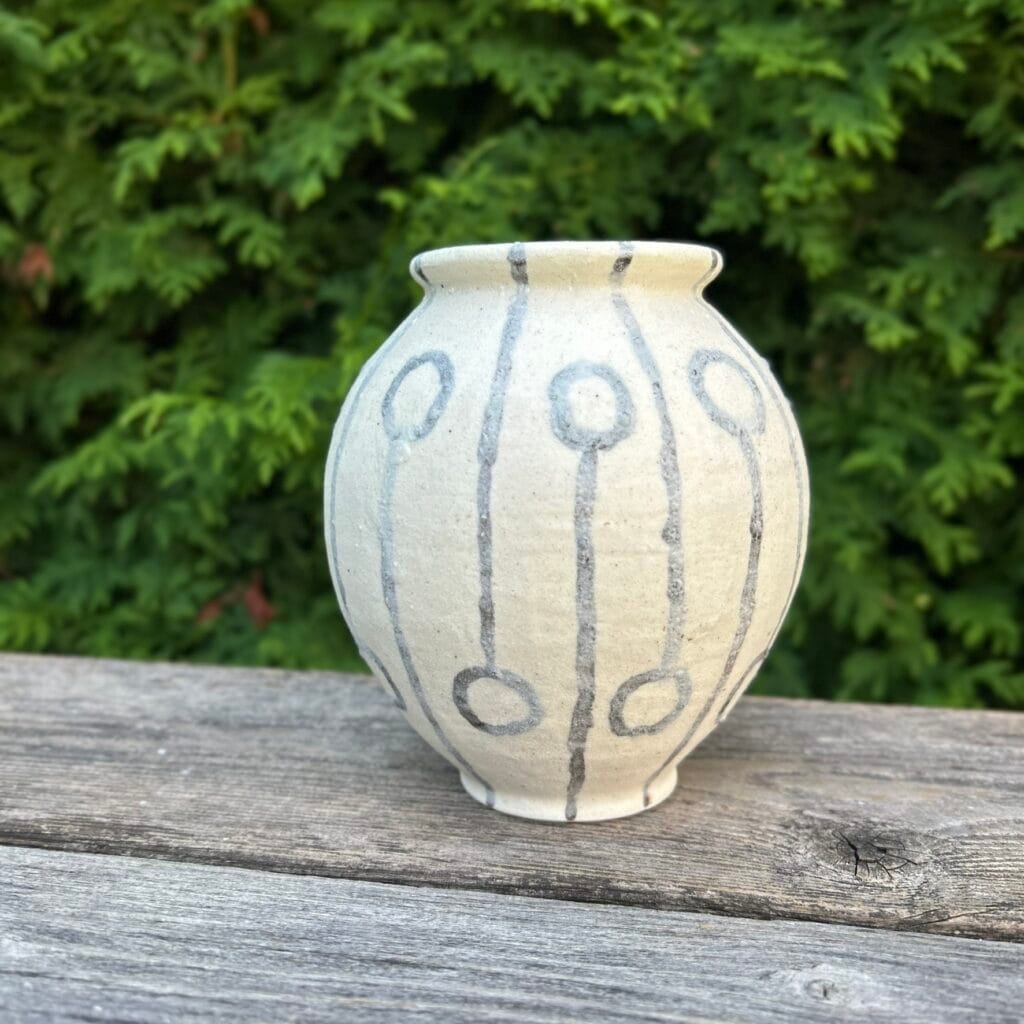

Moon Jar [É23M – 2]



As always, thank you for read !
Leave a Reply